

Finding the Right Commercial Roofing Company Houston: Your Complete 2025 Guide
When Hurricane Beryl swept through Houston in 2024, it left thousands of commercial buildings with damaged roofs and business owners scrambling to find reliable contractors. The aftermath revealed a harsh truth: not all roofing companies are created equal, and choosing the wrong commercial roofing company Houston can cost your business far more than money—it can cost you time, reputation, and peace of mind. 🏢
As a business owner in the Greater Houston area, your commercial roof is one of your most critical investments. It protects your inventory, equipment, employees, and operations from Texas’s unpredictable weather patterns. Whether you’re dealing with the intense summer heat, sudden hailstorms, or hurricane-force winds, having a trusted commercial roofing partner isn’t just smart business—it’s essential for survival.
Key Takeaways
• Quality matters most: The cheapest bid often leads to the most expensive problems down the road
• Local expertise is crucial: Houston’s unique climate requires specialized knowledge and materials
• Proper licensing and insurance: Verify credentials before signing any contract to protect your investment
• Multiple roofing systems available: TPO, EPDM, metal, and spray foam each offer distinct advantages for different applications
• Preventive maintenance saves money: Regular inspections and maintenance can extend roof life by 50% or more
Understanding Commercial Roofing in Houston’s Unique Climate
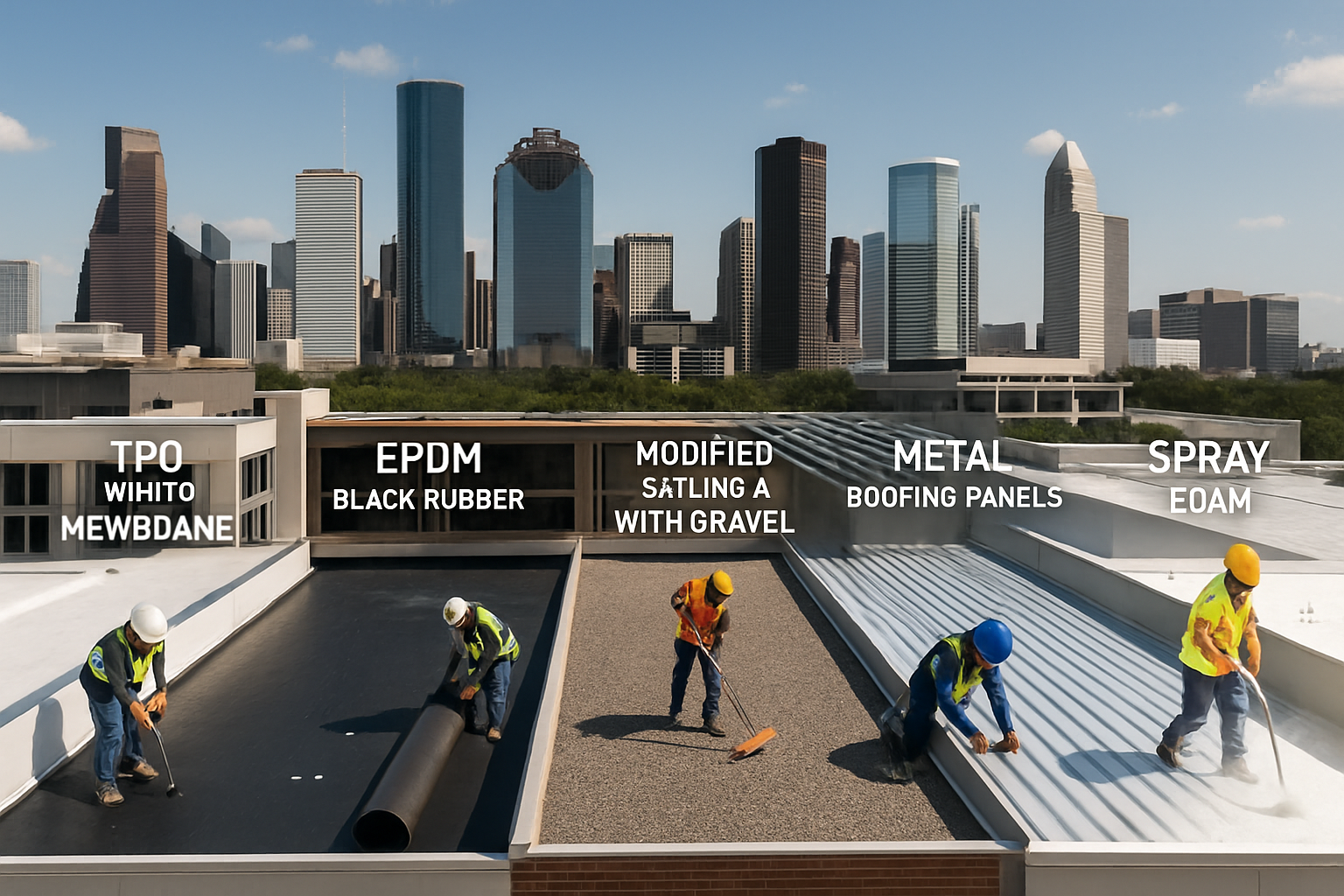
Houston’s subtropical climate presents unique challenges that require specialized expertise from your commercial roofing company Houston. With average annual rainfall exceeding 49 inches, intense UV exposure, and the constant threat of severe weather, your commercial roof faces conditions that would challenge even the best materials and installation practices.
The Houston Weather Challenge
The combination of high humidity, temperature fluctuations, and severe weather events creates a perfect storm for roofing problems. During summer months, roof surface temperatures can exceed 160°F, causing materials to expand and contract repeatedly. This thermal cycling, combined with sudden temperature drops during storm fronts, puts enormous stress on roofing systems.
Hurricane season brings additional concerns. From June through November, Houston businesses must prepare for potential wind damage, flying debris, and massive water infiltration. The 2017 Hurricane Harvey demonstrated how quickly flooding can overwhelm even well-designed drainage systems, making proper roof design and installation critical for business continuity.
Why Local Expertise Matters
Working with a local commercial roofing company means partnering with professionals who understand these challenges intimately. Local contractors have experience with:
- Building codes specific to Harris County
- Insurance requirements for hurricane-prone areas
- Material selection for high-humidity environments
- Drainage design for intense rainfall events
- Emergency response protocols during severe weather
Types of Commercial Roofing Systems Available in Houston
Selecting the right roofing system for your Houston commercial property requires understanding the advantages and limitations of each option. The choice depends on factors including building design, budget, expected lifespan, and specific performance requirements.
TPO (Thermoplastic Polyolefin) Roofing
TPO has become increasingly popular among Houston businesses due to its excellent heat reflection properties and cost-effectiveness. This single-ply membrane system offers several advantages:
Benefits:
- Energy efficiency: White TPO membranes reflect up to 87% of solar radiation
- Durability: Resistant to UV rays, ozone, and chemical exposure
- Cost-effective: Lower installation costs compared to many alternatives
- Flexibility: Maintains elasticity in temperature extremes
Ideal for: Office buildings, retail centers, warehouses with moderate foot traffic
EPDM (Ethylene Propylene Diene Monomer) Roofing
EPDM rubber roofing has proven its worth in Houston’s challenging climate over several decades. This synthetic rubber membrane provides:
Key advantages:
- Longevity: Properly installed systems can last 20-30 years
- Weather resistance: Excellent performance in extreme temperatures
- Low maintenance: Minimal ongoing care requirements
- Proven track record: Decades of successful performance data
Best suited for: Industrial facilities, manufacturing plants, buildings requiring long-term reliability
Modified Bitumen Systems
Modified bitumen combines the waterproofing properties of asphalt with polymer modifiers for enhanced performance. This multi-layer system offers:
Primary benefits:
- Redundancy: Multiple layers provide backup waterproofing
- Puncture resistance: Excellent durability against foot traffic and equipment
- Repair-friendly: Easy to patch and maintain
- Cost-effective: Good value for buildings requiring frequent roof access
Metal Roofing Solutions
Metal roofing systems have gained popularity for their exceptional durability and energy efficiency. Options include standing seam, corrugated panels, and architectural metal systems:
Advantages:
- Longevity: 40-70 year lifespan with proper maintenance
- Energy efficiency: Reflective coatings reduce cooling costs
- Fire resistance: Class A fire rating
- Recyclability: Environmentally sustainable option
For specialized applications, spray foam roofing provides seamless coverage and excellent insulation properties, particularly valuable for buildings with complex roof geometries.
How to Choose the Best Commercial Roofing Company Houston
Selecting the right contractor can make the difference between a roof that protects your business for decades and one that becomes a constant source of problems and expenses. Here’s what to look for when evaluating potential partners.
Licensing and Insurance Verification
Before considering any contractor, verify their credentials through official channels:
Required licenses:
- Texas Department of Licensing and Regulation (TDLR) registration
- Local business license for your municipality
- Manufacturer certifications for specific roofing systems
Essential insurance coverage:
- General liability insurance (minimum $1 million per occurrence)
- Workers’ compensation for all employees
- Commercial auto insurance for company vehicles
- Professional liability coverage for design-build projects
Experience and Track Record
Look for contractors with substantial experience in commercial roofing, particularly in the Houston market. Key indicators include:
- Years in business (minimum 10 years recommended)
- Local project portfolio with verifiable references
- Manufacturer partnerships and training certifications
- Industry association memberships (NRCA, RCMA, local associations)
Quality Assurance and Warranties
A reputable commercial roofing company Houston should offer comprehensive warranty protection:
Warranty types to expect:
- Manufacturer material warranties (typically 15-30 years)
- Contractor workmanship warranties (minimum 5 years)
- System warranties combining materials and labor
- Maintenance program options to preserve warranty coverage
Financial Stability and Bonding
Ensure your contractor has the financial resources to complete your project and honor warranty commitments:
- Bonding capacity appropriate for your project size
- Credit references from suppliers and subcontractors
- Financial statements for large projects
- Payment terms that protect both parties
Services Offered by Leading Commercial Roofing Companies
Comprehensive roofing contractors provide services throughout the entire roof lifecycle, from initial design through eventual replacement. Understanding available services helps you select a partner capable of meeting all your roofing needs.
New Roof Installation
New construction and roof replacement projects require careful planning and execution. Leading contractors offer:
Design services:
- Structural analysis and load calculations
- Drainage design for Houston’s intense rainfall
- Energy efficiency optimization
- Code compliance verification
Installation expertise:
- Project management with clear timelines and milestones
- Quality control inspections at each phase
- Safety protocols meeting OSHA requirements
- Minimal business disruption through careful scheduling
Roof Repair and Maintenance
Proactive maintenance extends roof life and prevents costly emergency repairs. Comprehensive roof repair and maintenance programs include:
Routine maintenance services:
- Bi-annual inspections (spring and fall recommended)
- Drainage system cleaning and maintenance
- Sealant and flashing inspection and renewal
- Minor repair completion before problems escalate
Emergency repair capabilities:
- 24/7 emergency response for storm damage
- Temporary weatherproofing to prevent further damage
- Insurance claim assistance and documentation
- Permanent repair completion with warranty coverage
Roof Restoration
Roof restoration can extend the life of aging systems while providing significant cost savings compared to replacement:
Restoration benefits:
- Cost savings of 40-60% compared to replacement
- Extended roof life of 10-15 years
- Improved energy efficiency through reflective coatings
- Minimal business disruption during application
Specialty Services
Many leading contractors offer additional services that complement their roofing expertise:
- Gutter installation and maintenance for proper water management
- Insulation upgrades for energy efficiency
- Skylight installation and replacement
- Solar panel mounting system installation
Cost Factors and Budgeting for Commercial Roofing Projects
Understanding the factors that influence commercial roofing costs helps you budget effectively and evaluate proposals accurately. Costs vary significantly based on system type, building characteristics, and project complexity.
Primary Cost Drivers
Building characteristics:
- Roof size and complexity: Larger, simpler roofs cost less per square foot
- Height and accessibility: Multi-story buildings increase labor costs
- Existing roof removal: Tear-off adds $2-4 per square foot
- Structural modifications: Upgrades for code compliance increase costs
Material selection:
- System type: TPO ($8-12/sq ft), EPDM ($10-15/sq ft), Metal ($12-20/sq ft)
- Membrane thickness: Thicker membranes cost more but last longer
- Insulation requirements: Energy codes may mandate specific R-values
- Warranty level: Extended warranties increase material costs
Project timing:
- Seasonal demand: Spring and fall are peak seasons with higher prices
- Emergency vs. planned: Emergency work costs 25-50% more
- Weather delays: Houston’s climate can extend project timelines
- Permit processing: Allow 2-4 weeks for permit approval
Financing Options
Many contractors offer financing programs to help businesses manage roofing investments:
Available financing:
- Traditional bank loans for established businesses
- Equipment financing with roofing as collateral
- Contractor financing programs with competitive rates
- Energy efficiency incentives for qualifying systems
For businesses exploring financing options, roofing financing programs can make quality roofing systems more accessible.
Return on Investment Considerations
Quality roofing systems provide measurable returns through:
Energy savings:
- Reduced cooling costs from reflective membranes
- Improved insulation reducing heating and cooling loads
- Utility rebates for energy-efficient installations
Operational benefits:
- Reduced maintenance costs from quality installations
- Avoided business interruption from roof failures
- Improved property values from quality improvements
- Insurance premium reductions for superior roofing systems
Service Areas: Where to Find Quality Commercial Roofing Company Houston
The Greater Houston metropolitan area encompasses numerous communities, each with unique building codes, architectural styles, and roofing challenges. Leading commercial roofing contractors serve the entire region, providing consistent quality and service across all markets.
Primary Service Areas
Harris County Communities:
- Houston – Downtown, Galleria, Energy Corridor, Medical Center
- Katy – Rapid commercial growth requiring modern roofing solutions
- Cypress – Mixed-use developments and industrial facilities
- Humble – Oil and gas industry commercial buildings
- Spring – Growing business district with diverse roofing needs
Montgomery County Markets:
- The Woodlands – Corporate headquarters and office complexes
- Conroe – Manufacturing and distribution facilities
- Willis – Industrial and agricultural commercial buildings
- Magnolia – Rural commercial and agricultural structures
- Pinehurst – Small business and retail developments
Fort Bend County Areas:
- Sugar Land – Corporate offices and retail centers
- Richmond – Historic commercial districts requiring specialized approaches
- Missouri City – Mixed commercial and retail developments
Brazoria County Locations:
- Pearland – Rapidly expanding commercial corridor
- Manvel – Industrial and logistics facilities
For businesses seeking a reliable roofing company in The Woodlands or Spring Texas roofer, working with contractors who understand local market conditions ensures optimal results.
Regional Expertise Advantages
Local commercial roofing companies offer several advantages over national chains:
Local knowledge benefits:
- Building code familiarity across multiple jurisdictions
- Established supplier relationships for faster material delivery
- Local subcontractor networks for specialized work
- Weather pattern understanding for optimal scheduling
- Emergency response capabilities during severe weather events
Community investment:
- Local reputation dependent on quality work
- Community involvement and support
- Accessible customer service with local offices
- Long-term relationships for ongoing maintenance needs
Maintenance and Preventive Care Programs
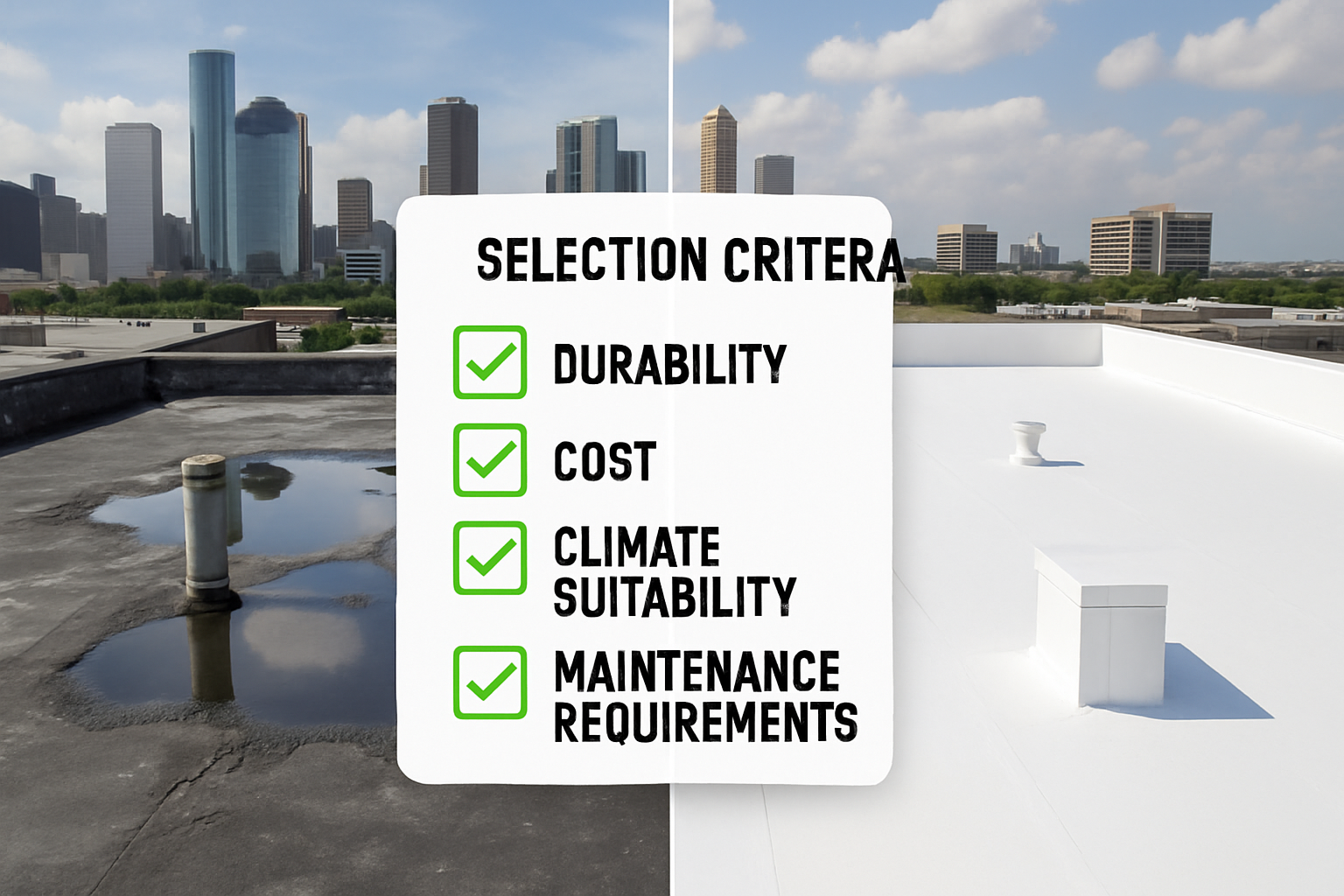
Proactive maintenance represents the most cost-effective approach to commercial roof management. Well-designed maintenance programs can extend roof life by 50% or more while preventing costly emergency repairs and business interruptions.
Comprehensive Inspection Programs
Regular inspections form the foundation of effective roof maintenance. Professional roof inspections should occur at least twice annually, with additional checks following severe weather events.
Spring inspection focus:
- Winter damage assessment from freeze-thaw cycles
- Drainage system evaluation before heavy rain season
- Membrane condition check after thermal cycling
- Flashing and sealant inspection for winter deterioration
Fall inspection priorities:
- Summer heat damage evaluation from extreme temperatures
- Hurricane season damage assessment from wind and rain
- Drainage preparation for winter weather
- Preventive repairs before harsh winter conditions
Post-storm inspections:
- Immediate damage assessment for insurance claims
- Emergency repair identification to prevent water intrusion
- Safety hazard evaluation for building occupants
- Temporary protection installation when needed
Preventive Maintenance Tasks
Routine maintenance tasks address minor issues before they become major problems:
Drainage maintenance:
- Gutter cleaning and debris removal
- Drain inspection and clearing
- Downspout evaluation and repair
- Slope verification for proper water flow
Membrane care:
- Surface cleaning to remove debris and contaminants
- Seam inspection and re-sealing when necessary
- Puncture repair from foot traffic or equipment
- UV protection through coatings when appropriate
Flashing and penetration maintenance:
- Sealant renewal around roof penetrations
- Flashing adjustment for proper water shedding
- Equipment mounting inspection and tightening
- Expansion joint maintenance and sealing
Maintenance Program Benefits
Structured maintenance programs provide measurable returns on investment:
Financial benefits:
- Extended roof life reducing replacement frequency
- Lower repair costs through early problem identification
- Energy savings from properly maintained systems
- Insurance premium reductions for well-maintained properties
Operational advantages:
- Reduced business interruption from emergency repairs
- Predictable budgeting through scheduled maintenance
- Warranty preservation meeting manufacturer requirements
- Improved property values from well-maintained assets
For businesses interested in comprehensive maintenance solutions, professional roof maintenance programs offer peace of mind and cost savings.
Emergency Roofing Services and Storm Response
Houston’s location along the Gulf Coast makes it vulnerable to severe weather events that can cause significant roof damage. Having a relationship with a commercial roofing company Houston that provides 24/7 emergency services can mean the difference between minor repairs and catastrophic business losses.
Types of Roofing Emergencies
Weather-related damage:
- Hurricane and tropical storm damage from high winds and flying debris
- Hail damage causing membrane punctures and equipment damage
- Tornado damage from extreme winds and pressure changes
- Flash flood damage from overwhelmed drainage systems
Structural emergencies:
- Roof collapse from excessive loads or structural failure
- Large membrane tears exposing building interiors
- Equipment failure affecting HVAC or other roof-mounted systems
- Fire damage requiring immediate weatherproofing
Emergency Response Procedures
Professional emergency response follows established protocols to minimize damage and ensure safety:
Immediate response (0-2 hours):
- Safety assessment of building and occupants
- Temporary weatherproofing to prevent water intrusion
- Damage documentation for insurance claims
- Emergency contact with property management and insurance
Short-term stabilization (2-24 hours):
- Comprehensive damage assessment with detailed reporting
- Temporary repairs to restore basic weather protection
- Equipment protection for roof-mounted systems
- Debris removal and site cleanup
Permanent repair planning (1-7 days):
- Insurance adjuster coordination for claim processing
- Repair scope development with cost estimates
- Material ordering for permanent repairs
- Permit applications for major repair work
Working with Insurance Companies
Experienced commercial roofing contractors assist with insurance claims throughout the process:
Documentation support:
- Detailed damage reports with photographs and measurements
- Repair cost estimates based on current market pricing
- Code compliance requirements affecting repair scope
- Timeline development for restoration work
Claim advocacy:
- Adjuster meetings to explain damage and repair requirements
- Technical expertise regarding roofing systems and standards
- Negotiation support for fair claim settlements
- Supplemental claim assistance for hidden damage discovery
For comprehensive information about storm preparation and response, businesses can reference resources on preparing roofs for severe weather.
Quality Assurance and Industry Standards
Quality commercial roofing requires adherence to industry standards, manufacturer specifications, and local building codes. Understanding these requirements helps building owners evaluate contractor capabilities and ensure project success.
Industry Standards and Certifications
National Roofing Contractors Association (NRCA):
- Installation guidelines for all major roofing systems
- Safety protocols for worker and building protection
- Quality standards for materials and workmanship
- Continuing education requirements for member contractors
Manufacturer certifications:
- Installation training for specific roofing systems
- Quality requirements for warranty eligibility
- Technical support for complex installations
- Material specifications for optimal performance
Building code compliance:
- International Building Code (IBC) requirements
- Local amendments and specific requirements
- Energy efficiency standards for new construction and renovations
- Fire safety requirements for different building types
Quality Control Processes
Professional contractors implement comprehensive quality control throughout project execution:
Pre-installation planning:
- Material inspection upon delivery to job site
- Weather monitoring for optimal installation conditions
- Crew training verification for specific project requirements
- Safety protocol review with all team members
Installation monitoring:
- Daily quality inspections by project supervisors
- Progress documentation with photographs and reports
- Material application verification according to specifications
- Problem identification and immediate correction
Final inspection and testing:
- Comprehensive system inspection before project completion
- Water testing for leak detection and drainage verification
- Documentation completion for warranty activation
- Client walkthrough and system explanation
Warranty Programs and Protection
Comprehensive warranty programs protect building owners’ investments:
Material warranties:
- Manufacturer coverage for material defects and performance
- Coverage periods ranging from 15-30 years depending on system
- Transferability for property sales
- Maintenance requirements for warranty preservation
Workmanship warranties:
- Contractor guarantees for installation quality
- Coverage periods typically 5-10 years for labor
- Response commitments for warranty-related issues
- Financial backing through bonding or insurance
System warranties:
- Comprehensive coverage combining materials and labor
- Single-source responsibility for all warranty issues
- Extended coverage options for premium protection
- Maintenance program integration for optimal performance
Technology and Innovation in Commercial Roofing
The commercial roofing industry continues to evolve with new technologies that improve performance, reduce costs, and enhance building sustainability. Modern commercial roofing company Houston contractors stay current with these innovations to provide clients with the most advanced solutions available.
Smart Roofing Technologies
Membrane monitoring systems:
- Leak detection sensors providing real-time alerts
- Moisture monitoring to identify problems before visible damage
- Temperature tracking for energy management
- Wireless connectivity for remote monitoring capabilities
Drone inspection technology:
- High-resolution imagery for detailed condition assessment
- Thermal imaging to identify insulation problems and leaks
- 3D mapping for accurate measurements and planning
- Safety improvements reducing need for personnel on roof
Building automation integration:
- HVAC coordination for optimal energy efficiency
- Weather monitoring for proactive maintenance scheduling
- Energy management through smart roofing systems
- Predictive maintenance based on performance data
Sustainable Roofing Solutions
Environmental consciousness drives innovation in commercial roofing materials and systems:
Cool roofing technologies:
- Reflective membranes reducing urban heat island effects
- Energy savings of 20-30% on cooling costs
- Utility rebates for energy-efficient installations
- LEED certification points for sustainable building practices
Green roofing systems:
- Extensive systems with low-maintenance vegetation
- Intensive systems for rooftop gardens and recreation
- Stormwater management reducing runoff and flooding
- Air quality improvement through natural filtration
Solar integration:
- Ballasted systems for membrane protection
- Penetrating mounts with proper waterproofing
- Building-integrated photovoltaics (BIPV)
- Energy storage integration for grid independence
Advanced Materials and Systems
High-performance membranes:
- Enhanced durability through improved polymer formulations
- Self-adhering systems reducing installation time and labor
- Extreme weather resistance for hurricane-prone areas
- Recyclable materials supporting circular economy principles
Spray foam innovations:
- Closed-cell formulations with superior insulation properties
- Renewable content reducing environmental impact
- Seamless application eliminating potential leak points
- Restoration capabilities extending existing roof life
Conclusion
Selecting the right commercial roofing company Houston represents one of the most important decisions you’ll make for your business property. Your roof protects everything valuable inside your building—inventory, equipment, employees, and operations—making quality installation and ongoing maintenance essential for business success.
Throughout this guide, we’ve explored the critical factors that distinguish exceptional roofing contractors from the rest. From understanding Houston’s unique climate challenges to evaluating contractor credentials, from selecting appropriate roofing systems to implementing preventive maintenance programs, each decision impacts your building’s performance and your bottom line.
The investment in quality roofing pays dividends through reduced energy costs, fewer emergency repairs, extended system life, and uninterrupted business operations. Whether you’re planning a new installation, major repair, or routine maintenance, partnering with experienced professionals ensures optimal results and long-term value.
Your Next Steps
- Assess your current roof condition through professional inspection
- Research potential contractors using the criteria outlined in this guide
- Obtain multiple detailed proposals for comparison and evaluation
- Verify credentials and references before making your final selection
- Develop a long-term maintenance plan to protect your investment
For businesses throughout the Greater Houston area seeking reliable commercial roofing solutions, Rooftop Innovations continues to lead the industry in quality, competitive pricing, and on-time project completion. Our experienced team serves communities from Houston to Waco, providing comprehensive roofing services backed by industry-leading warranties and customer support.
Don’t wait for roofing problems to disrupt your business operations. Contact qualified commercial roofing professionals today to discuss your specific needs and develop a customized solution that protects your investment for years to come. Your roof is too important to trust to anyone but the best—choose wisely, and your business will benefit from reliable protection against whatever Mother Nature brings to Southeast Texas.
References
[1] National Weather Service, Houston/Galveston Office. “Houston Climate Data and Extremes.” 2025.
[2] National Roofing Contractors Association. “Commercial Roofing Manual.” 2024 Edition.
[3] International Code Council. “International Building Code.” 2024 Edition.
[4] Texas Department of Insurance. “Hurricane Preparedness for Commercial Properties.” 2024.
[5] Cool Roof Rating Council. “Cool Roof Benefits and Energy Savings.” 2024 Annual Report.
SEO Meta Title: Commercial Roofing Company Houston | Expert Installation & Repair 2025
Meta Description: Find Houston’s top commercial roofing company for installation, repair & maintenance. Licensed contractors serving Katy, Spring, The Woodlands & surrounding areas.